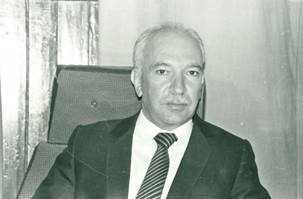
AFGHANISTAN · 1934–2004

Fazlulhaq
Khaliqyar

Economist. Statesman. Prime Minister.

From Herat to Kabul. A life in public service, through three political eras of Afghanistan.

Explore his life
Fazlulhaq Khaliqyar, 1991
HERAT — KABUL

THE BIOGRAPHY

A life in the service of Afghanistan

Fazlulhaq Khaliqyar, the former prime minister of Afghanistan, was born in Herat on May 31, 1934. He was considered one of the country's most experienced economists. During his 35 years in office in three different regimes, he served his country as a high-ranking government official in a number of important positions. His last post (1990 - 1992) was Prime Minister of Afghanistan. He died in exile in the Netherlands on July 16, 2004, at the age of 70.

Born
31 May 1934 · Herat
Prime Minister
1990–1992 · Afghanistan
Died
16 July 2004 · Netherlands

THE CHRONOLOGY

The years that shaped a life

From a childhood in Herat and a career in public administration to the office of Prime Minister.

Chapter 01 / 1934–1954

Herat & the student years

1934

Born in Herat

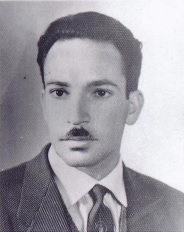
Fazlulhaq Khaliqyar was born on May 31, 1934, in the city of Herat into a large and wealthy family.[1] Both his father Ghulam Yahya Khan Timuri and his grandfather Khaliqdad Khan Timuri were influential figures in the northwest of the country and both held leading regional offices in the Kingdom of Afghanistan. According to the family tree, their ancestry reaches to Shah Rukh Mirza. Shah Rukh Mirza was the youngest son of the founder of the Timurid Empire, Timur. He ascended the throne after the death of his father and moved his capital from Samarkand to Herat.[2]

At the time when Khaliqyar was born, the social system of Herat can be defined as a semi-feudal system, the real power of the society was in the hands of the big landowners. Most of the society followed them. They considered land as the only source and means of wealth and a solid, stable social and political base. Khans and tribal leaders worked tirelessly to protect, expand and control their power bases in society.
1954

Studying in Kabul

Khaliqyar's youth coincided with the development of education in Afghanistan. He was among the first graduates of Sultan Ghiyasuddin Ghori High School in Herat. He was able to enter Kabul University with excellent results. He studied economics at Kabul University.[3] He began his studies in 1954.

Chapter 02 / 1958–1973

The Kingdom of Afghanistan

1958

Joining the Ministry of Planning

After successfully completing his studies, he began working as a civil servant in the newly established Ministry of Planning in 1958.[1] As a rule, university graduates at that time had to complete two years of military service before they were allowed to work. In exceptional cases, however, ministries could apply to the Ministry of Defense for a grace period of up to two years for their newly hired employees.

The Ministry of Planning, which was headed directly by Prime Minister Mohammed Daoud Khan, was considered one of the most competent and important state bodies at the time and has a special status in the Afghan government. At that time, the Afghan staff of this ministry numbered no more than one hundred people. Great attention was paid to the selection of staff, with scientific qualifications and competence as basic criteria for recruitment. In addition to the domestic staff, there were also a number of foreign specialists and experts. Some of these specialists worked with this Ministry within the framework of inter-country cooperation programs. Among the foreign specialists and consultants, the United States had a higher weighting, followed by some United Nations institutions and organizations.

While working at the Ministry of Planning, Khaliqyar was able to deepen his technical and professional skills and also had the opportunity to learn a lot from the leading and experienced figures in this Ministry as well as from foreign experts. In addition, his talent and diligence attracted the attention of the Ministry's management, as evidenced by certificates.

1960–1961

Military service & return

After working for two years at the Ministry of Planning, he entered the reservist course at the Military Academy in 1960. After one year of military service, he returned early to the Ministry of Planning, where he obtained a senior position in the Statistics Department.

1962

Administration & regional development

Fazlulhaq Khaliqyar, 1965

In 1962, he left the Ministry of Planning to become Administrative Director of Herat Province and later Deputy Director for the Development of Helmand and Arghandab Valleys.

1964
Historical context

A new constitution

The most important event of this period in Afghanistan was the introduction of a new constitution in October 1964, which marked the transition from absolute monarchy to constitutional monarchy.[4]

1966

Returning to Kabul

In September 1966, he returned to Kabul and became deputy administrative director in the Ministry of Telecommunications.

1967

Joining the Ministry of Finance

In February 1967, Khaliqyar transferred to the Ministry of Finance, where he became director of administration.

1969

Kabul provincial finances

Two years later, in March 1969, he was appointed head of the Kabul Provincial Finance Administration, where he also temporarily held the post of deputy governor of Kabul.

1971

Back at the Ministry of Finance

In September 1971, he was again appointed Administrative Director of the Ministry of Finance.

1972

Governor of Baghlan

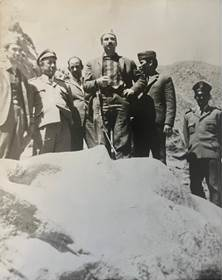
Fazlulhaq Khaliqyar, 1972

In March 1972, he was appointed Governor of Baghlan Province.

Baghlan Province in March 1972. Baghlan Province is one of Afghanistan's industrial provinces and is located in the north of the country. Baghlan is also home to the city of Pol-e-Chomri, an important metropolis in northern Afghanistan. During his approximately one-year tenure in Baghlan Province, Khaliqyar worked tirelessly to address the problems of the population, and numerous projects, such as the expansion of the irrigation system and canals for agriculture, as well as other infrastructure projects such as road construction, were initiated. In order to get an idea of the life of the people in the remote places of this province, he visited the remote places and districts of Baghlan where no governor had ever been before.

Chapter 03 / 1973–1978

The first republic

1973

Deputy Minister of Finance

In January 1973, Khaliqyar returned to the Ministry of Finance and was appointed Deputy Minister of Finance.

On July 17, 1973, the monarchy in Afghanistan under King Zahir Shah was overthrown in a military coup by his cousin Mohammed Daoud Khan, who then proclaimed Afghanistan's first republic and suspended the 1964 constitution.[5]

After Mohammed Daoud Khan came to power, the post of finance minister, like other ministries, was filled by his confidants. A week after the coup, Daoud Khan invited Khaliqyar to a meeting at his residence and expressed satisfaction with his work so far and instructed him to continue his work as deputy finance minister and to support the new finance minister he had appointed, Said Abdullah.

1973

International economic and financial policy

In September 1973, Khaliqyar represented Afghanistan at the World Bank and International Monetary Fund Annual Meetings in Nairobi. He advocated more development assistance and a lighter debt burden. He also supported tariff protection for young industries and better export opportunities for developing countries.[6]

1975

Representing Afghanistan at the World Bank

In 1975, Khaliqyar represented Afghanistan as its Governor at the World Bank. In that capacity, he also served on the Administrative Council of the International Centre for Settlement of Investment Disputes (ICSID).[7]

1977

Acting Minister of Finance

Mohammed Daoud Khan was elected Afghanistan's first president in February 1977 by members of the Loya Jirga (Grand Assembly). Until then, he had led the country as head of state and government. After his election as president, he appointed Finance Minister Said Abdullah as his vice president. Khaliqyar became acting finance minister.

1978

Public finances & development

As deputy finance minister, acting finance minister, and most recently finance minister, Khaliqyar managed to secure numerous grants and loans to finance industry, irrigation, and other projects for Afghanistan during his participation in meetings of the World Bank, International Monetary Fund, Bank of Asia, and other financial institutions. Under his leadership, the Ministry of Finance achieved the goal of raising the national budget for the year 1357 of the Solar Hijri calendar (1978–1979) from government revenues and without outside assistance or loans.

Chapter 04 / 1978–2004

Later years

1978–1985

Continuing work in public finance

After the change of government in 1978, Khaliqyar continued his work in public finance. He served as an adviser to the Ministry of Finance and again held responsibilities as deputy finance minister and minister of state for financial affairs during the 1980s.[3]

1980

Economic difficulties and private investment

In 1980, Khaliqyar again addressed the World Bank and International Monetary Fund Annual Meetings. He highlighted Afghanistan’s lack of access to the sea, high transport costs and obstacles to foreign trade. In presenting government policy, he emphasized support for private enterprise and investment alongside the public sector.[8]

1988

Responsibilities in Herat and the northwest

In the late 1980s, Khaliqyar was Governor of Herat. His regional responsibilities expanded: duties covering the provinces of Badghis and Ghor are also recorded for 1988.[9] [10]

1990

Severely wounded in Herat

On 6 April 1990, Khaliqyar was severely wounded during a ceremony. A group of mujahideen who were expected to surrender their weapons opened fire on government representatives. Several people were killed in the attack.[10]

1990–1992

Prime Minister of Afghanistan

Fazlulhaq Khaliqyar, 1991

In May 1990, the non-party Khaliqyar became Prime Minister under President Mohammad Najibullah. He presented his cabinet on 21 May. The key security ministries remained in the hands of ruling-party members.[11] [12]

His programme called for support for private enterprise and foreign investment, and action against corruption. He supported a free press that would serve national interests.[11]

1990

Chairing a mine-clearance commission

On 11 December 1990, a national commission for clearing mines and unexploded ordnance was established under Khaliqyar’s chairmanship.[13]

1990–1992

Cultural interests and support

During his premiership, Khaliqyar also supported cultural projects. Abdul Hakim Sharai Jowzjani, a member of the relevant anniversary committee, recalls that Khaliqyar enabled the publication of Alisher Navoi's Turkic Khamsa and approved five million afghanis for it. He also remembers Khaliqyar's support for historic monuments in Herat and for the artist Mohammad Saeed Mashal.[14]

1991

Diplomacy and national reconciliation

Khaliqyar met foreign government representatives. His diplomatic contacts included a meeting with Indian representatives during bilateral talks in Afghanistan.[15]

On 24 September 1991, he addressed the United Nations General Assembly in New York. He described the transition to an elected government as a central task of his cabinet and supported the peace efforts of Javier Pérez de Cuéllar and Benon Sevan. He also called for assistance for the population affected by the war.[16]

In his address, Khaliqyar reaffirmed readiness for direct talks with the government’s opponents without preconditions and with neutral mediation, including by the United Nations. He opposed vengeance and reprisals and called for the transition to safeguard every citizen’s human rights regardless of previous affiliations and actions.[16]

He argued that supplies of food, medicine and fuel could not wait until the war ended. Khaliqyar also advocated normalizing relations with the United States, closer cooperation with neighbouring countries and Afghanistan’s admission to the South Asian Association for Regional Cooperation (SAARC). Foreign investment was to be encouraged through legal guarantees.[16]

In autumn 1991, Khaliqyar was named in proposals for a government of national unity that would also include resistance representatives. Major opposition groups rejected these offers.[17]

In his memoirs, the then Indian ambassador Vijay K. Nambiar remembers Khaliqyar's quiet dignity and traditional manners. Their first meeting was delayed because of Khaliqyar's fragile health.[18]

1992

The end of his premiership

In April 1992, Khaliqyar's premiership ended with the collapse of Najibullah's government. It was his final post in the Afghan government.[3]

On 28 April 1992, Khaliqyar took part in the transfer of power to Sibghatullah Mojaddedi.[19]

1992–2004

Life in exile

After the change of government, Khaliqyar left Afghanistan. He went first to India and later to the Netherlands.[1]

In his later years, Khaliqyar suffered from cancer.[20]

2004

Death in exile in the Netherlands

On 16 July 2004, Fazlulhaq Khaliqyar died at the age of 70 in a hospital in the Netherlands, where he was living in exile.[1]

Khaliqyar had expressed the wish to be buried in his native Herat. His body was due to be returned to Herat in the week following his death.[20]

Sources and further reading

Open the references
  1. Ariana Encyclopaedia: Fazlulhaq Khaliqyar
  2. Encyclopaedia Iranica: Herat — medieval history
  3. Heads of States and Governments — Khaliqyar entry

    P. 21 (PDF p. 34).

  4. ACKU: Afghanistan Law Database — 1964 constitution
  5. US Embassy Kabul: Telegram of 17 July 1973

    Foreign Relations of the United States, 1969–1976, volume E–8, document 4.

  6. IMF: Annual Meetings 1973 — Khaliqyar’s address

    Fifth Joint Session, p. 285 onwards.

  7. ICSID: Annual Report 1974/1975

    Annex 2, p. 10.

  8. IMF: Annual Meetings 1980 — Khaliqyar’s address

    Sixth Joint Session.

  9. Rulers.org — Fazal Haq Khaliqyar
  10. Ludwig W. Adamec: Historical Dictionary of Afghanistan (1997)

    2nd edition, chronology, pp. 405 and 411.

  11. UPI: Afghan Cabinet named (21 May 1990)
  12. ACKU: Programme of the prime minister-designate (1369)

    Catalogue no. 48252.

  13. Asia Watch: Afghanistan — The Forgotten War (1991)

    P. 55, note 141.

  14. Abdul Hakim Sharai Jowzjani: Recollections of Navoi's Khamsa

    Ariaye.

  15. Lok Sabha: Parliamentary report of 10 January 1991

    Pp. 307–310.

  16. United Nations: A/46/PV.7 (24 September 1991)

    English version, pp. 116–133.

  17. UPI: Afghan president remains defiant (6 October 1991)
  18. Vijay K. Nambiar: My Years in Kabul, 1990–1992 (2018)

    Indian Council of World Affairs (ICWA), p. 6.

  19. Amu TV: Account of the 1992 transfer of power

    28 April 2025.

  20. Babrak Ehsas, BBC Persian: Khaliqyar obituary (17 July 2004)